


Last updated on April 28th, 2023 at 09:01 pm
Go to hear the firsthand stories of former prisoners
It’s difficult to visit South Africa without conjuring up imagery of Apartheid, slavery, murder, torture, beatings, and more. And yet, there’s so much to see, do and know about this country. This is a place, chock full of culture, first world infrastructure, and a storied history — notable — positive and negative.
During the days of Apartheid, you’d have to live in solitary confinement under a rock most of your life to not know racism with its’ attendant cruelty continues with us throughout history. It’s only when you gain an up-front glimpse you can begin to grasp the horror of a practice like Apartheid.

Take a tour in Cape Town
In downtown Cape Town, South Africa at the main wharf, the Robben Island Museum presents the chronological history of the island as a leper and penal colony. Maps, books and other materials are for sale. Here, you can buy tickets for a boat ride to and from the island. Once there, a walking tour with a former Robben Island prisoner, yields an unforgettable, eye-opening, look into the window of his past, bringing forth all the grisly details and horror of his life on the island.
I took a look at 55 gallon drum-like stomach on our former prisoner tour guide and wondered: did he become so large by living the good life after his release? The answer? No. His captors had fun with his torso using knives, chains, leather straps, slabs of wood, and chunks of concrete.
There are 1,250 former prisoners from Robben Island alive today according to our guide. Their personal stories are gut-wrenching and compelling.
This tour is worth your time if you want to hear the personal story of the prisoner tour guide and look forward to the boat ride to Robben Island and back. Otherwise, you're better off contributing to this memorial museum by buying a book about this place (at the tour center in the wharf area downtown) and putting your time to better use.
But visitors not aware of some of this history over the centuries may find this approach lacking.
A larger world view
There’s a larger story to be told here. For example, if you visit the Golden Triangle museum in northern Thailand, you’ll learn how the British Empire played the world as a checkerboard manipulating commerce, triggering the opium wars, their version of slavery, and the consequential impacts of such practices to countries throughout the world.
A similar pattern of history needs to be told here about the Dutch and the British colonialists. It isn’t enough they were here and subjugated peoples of color for centuries. The Dutch needed the Cape as a waypoint and trading post to support their settlement in the Dutch East Indies (the Far East). Colored peoples from Indonesia, Bali, China and elsewhere were seized as slaves and shipped in.
And here’s a point I never knew before this tour. The Apartheid regime sliced and diced their racist views into categories. Blacks were different from colored peoples. The latter, were any peoples, other than whites, who are not black. Peoples from the Far East were imported in the South African colony as slaves.
Surprisingly, most of the slaves over the century were not solely from the African continent. The British had multiple reasons over the centuries for importing colored peoples here. The same multi-triangular relationships of exploitation and subjugation from continent to continent obvious from the opium wars can be found here. This story is not told effectively. And it should be.
Beyond the larger story, and less important overall, the details of this tour don’t offer up the resounding throng of support for the overall theme.
The Ferry's are overloaded and list with too many tourists aboard.
Once you arrive on the island, you're shuttled around on a tour bus. This is good since it's a little too big for the lame and elderly to walk around.
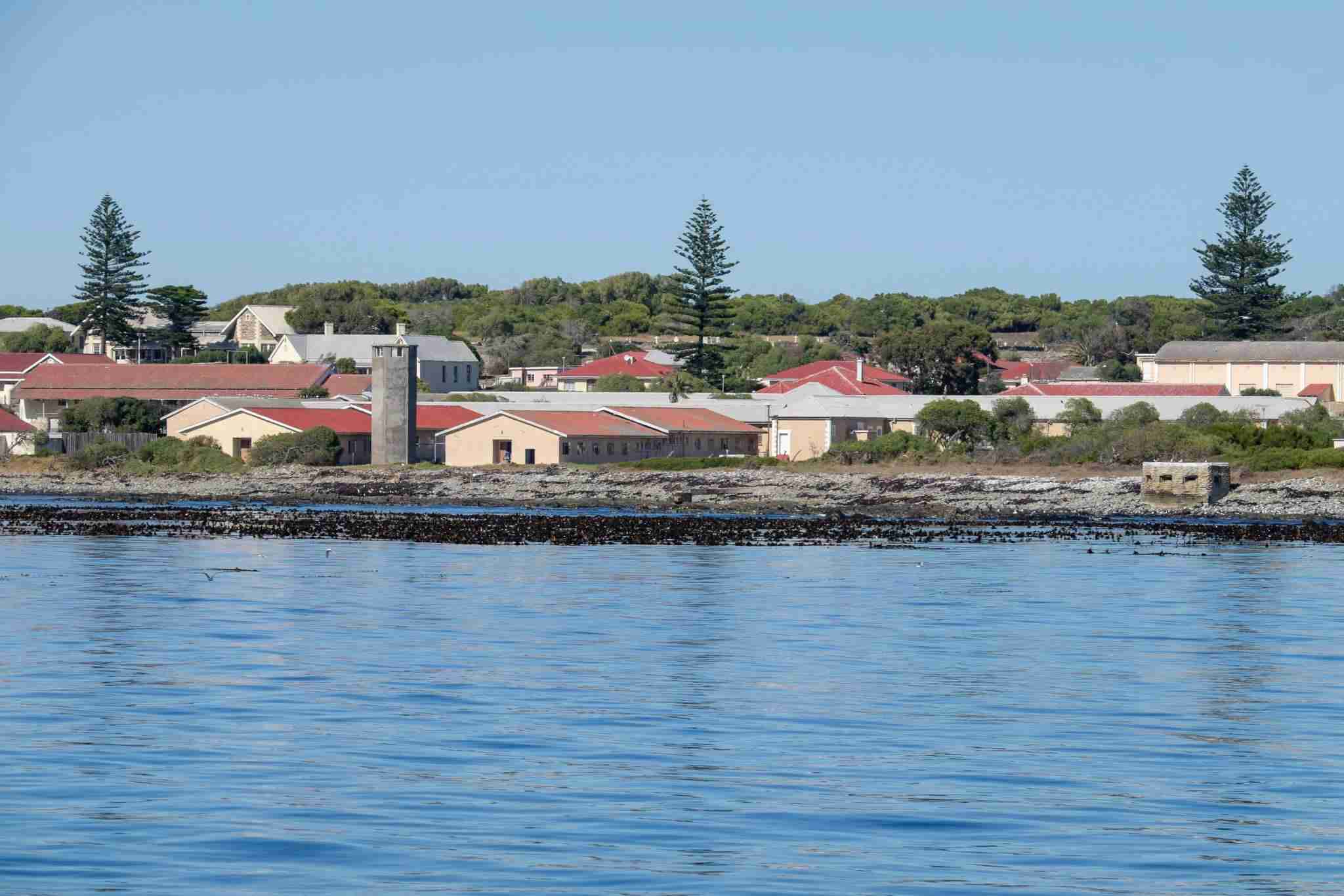
The island consists of many one-story, vacant buildings where terrible atrocities were inflicted on prisoners over the past four centuries. But a visit to the island does not impart a sense of value adding to the overall story all of us are aware of to some degree.
Contact:
Robben Island Museum,
Cape Town Central 7400, South Africa
Tel: +27 21 409 5100